
Anup Saha, currently a Wholetime Director at Kotak Mahindra Bank, has been appointed as the new Managing Director and Chief Executive Officer for a three-year term, effective January 1, 2027, with the Reserve Bank of India's approval.

Rohan Bopanna, India's former world number one doubles player, has been excluded from the AITA's Sportspersons of Outstanding Merit (SOM) roster. This exclusion is due to his failure to meet the mandatory one-year retirement criterion, as he announced his professional retirement on November 1, 2025, just shy of the October 16, 2026, deadline for the roster. Despite inquiring about his eligibility and receiving initial assurance, his continued participation on the Pro ATP tour until October 2025 meant he was still considered active.

L&T Finance reported a robust Q1FY27 with net profit growing 29% year-on-year to 900 crore, driven by strong asset growth and strategic initiatives including accelerating cross-selling, improving productivity, and fostering a technology-first, AI-led culture, alongside significant expansion in gold loans.

The Supreme Court has referred actor Rajpal Yadav's long-running cheque-dishonour dispute to mediation after he deposited Rs 2 crore with the court's registry. The court also directed the trial court to release his passport for professional commitments abroad. The dispute stems from a 2010 financial agreement for his directorial debut, leading to multiple cheque-bounce cases and a three-month imprisonment sentence upheld by the Delhi High Court.

Boxing Federation of India president Ajay Singh has suspended secretary general Pramod Kumar with immediate effect. The suspension is pending an inquiry into alleged financial irregularities, non-cooperation with investigations, and misuse of authority. Allegations include unauthorised work orders for broadcasting and failure to cooperate with inquiries into championship cancellations.

The Supreme Court advised actor Rajpal Yadav to make good movies and entertain people to rebuild his image, as it acknowledged his payment of Rs 1.15 crore in a long-running cheque-bounce case. The court also noted a prospective buyer for his property willing to deposit Rs 85 lakh. Yadav expressed financial losses from his film 'Ata Pata Laapata' and the impact on his career.

Opposition MPs have voiced strong concerns regarding the government's decision to levy a 0.4 per cent fee on UPI payments above Rs 2,000 made to merchants, effective October 15. They argue that this "anti-people" move will negatively impact a large segment of the population, despite the finance ministry clarifying that the charge is on the merchant ecosystem and not directly on customers for P2P or small payments.

'People started fearing Nana Patekar's frankness. Kuchh bhi bol sakta hai yeh. He once pointed to a major respected politician's belly and asked 'Kya hai yeh?''

Hockey India President Dilip Tirkey has lodged a police complaint against several HI officials, including the former Executive Director, accusing them of "criminal breach of trust, theft, endangerment of life and wrongful abandonment." The complaint stems from an incident where Tirkey's personal belongings, including medicines, were allegedly withheld after an official vehicle was recalled. This incident highlights an ongoing power struggle between Tirkey and HI Secretary General Bhola Nath Singh, exacerbated by past controversies like the saffron jersey fiasco and disputes over board meetings.

Shares of fintech firms, particularly Paytm, saw significant movement after the Indian government introduced a 0.4 per cent fee on UPI transfers exceeding Rs 2,000 made to merchants, effective October 15.
A high-level committee, including representatives from banks and payment associations, is set to decide on Merchant Discount Rate (MDR) for UPI transactions exceeding Rs 2,000 to merchants. While person-to-person and person-to-merchant transactions up to Rs 2,000 remain free, the move follows a recent amendment to the Payment and Settlement Systems Act, sparking debate and clarification from the Finance Minister that only certain high-value merchant transactions might incur charges.

'Separate needs from wants and minimise discretionary spending.'

An IIT Madras study reveals that financial cybercrime victims in India are often highly educated professionals, challenging the notion that only careless or financially unaware individuals are targeted. The research highlights that digital literacy doesn't guarantee protection, as fraudsters exploit stress and emotional vulnerabilities.

'Tax recovery will continue through attachment and sale of assets and other recovery mechanisms, but personal arrest will no longer form part of the prescribed recovery process.'

Mobile phone retailers across India, represented by AIMRA, are protesting the 0.4% Merchant Discount Rate (MDR) on UPI transactions exceeding Rs 2,000 for merchants. They plan to observe 'No UPI Day' on October 2, 2026, arguing that this fee will significantly impact their income and burden small businesses, advocating for a continued Zero MDR structure for UPI merchant payments.

The CBI has registered a case against Reliance Capital Limited (RCAP), its former chairman Anil Ambani, and others for an alleged Rs 2,684.57-crore fraud. The case stems from a complaint by the Life Insurance Corporation of India (LIC) regarding investments in RCAP's non-convertible debentures, alleging criminal conspiracy, misrepresentation, and fraudulent diversion of funds causing significant loss to LIC.

The Directorate of Revenue Intelligence (DRI) has conducted multiple intelligence-led operations across India, seizing over 845 kg of various contraband substances including ganja/cannabis, charas, amphetamine, and cocaine. These operations led to the arrest of 15 individuals involved in illicit drug trafficking, disrupting several supply chains.

The Indian government has introduced a 0.4% fee on UPI transactions above Rs 2,000 for merchants, effective October 15, sparking strong opposition from political parties and traders. Despite accusations of foreign influence and demands for a rollback, the finance ministry and top functionaries have stated there will be no reversal, citing the need for a self-sustaining digital payments ecosystem.

Former NITI Aayog vice-chairman Rajiv Kumar has urged the government to maintain zero-fee UPI transactions for several more years, arguing that the benefits of UPI as a public good outweigh the costs. This comes amidst the government's recent decision to introduce a 0.4% fee on person-to-merchant UPI transactions above Rs 2,000 from October 15, a move that has drawn criticism.
The Indian government has introduced a 0.4% Merchant Discount Rate (MDR) on UPI person-to-merchant (P2M) transactions exceeding Rs 2,000, effective October 15. This move ends nearly six years of fully free UPI payments, though person-to-person (P2P) transfers and small P2M payments remain free. The charges aim to bolster investment in UPI infrastructure, with specific exemptions and caps for essential sectors.

The CBI has registered a case against Reliance Capital Limited (RCAP), its former chairman Anil Ambani, and others for an alleged Rs 2,684.57-crore fraud involving investments made by the Life Insurance Corporation of India (LIC). Anil Ambani has denied any wrongdoing. The LIC alleges criminal conspiracy, misrepresentation, and fraudulent diversion of funds.

The Finance Ministry has dismissed allegations of US pressure influencing the 0.4% Merchant Discount Rate (MDR) on select UPI transactions. It clarified that NPCI guidelines prioritise RuPay credit cards on UPI and do not favour international cards. The ministry also asserted that the MDR, applicable to person-to-merchant transactions above Rs 2,000, is unlikely to increase cash transactions or cause inflation, with measures in place to prevent burdening consumers.

The Pakistan Cricket Board has filed a petition in the Islamabad High Court against the Pakistan Information Commission's directive to disclose its confidential financial records, player contracts, and employee salary details. The PCB argues that such disclosure would harm its commercial interests and contractual negotiations, as it operates in a competitive international environment and does not receive government funding.

The NCP (SP) has demanded a complete rollback of the 0.4 per cent Merchant Discount Rate (MDR) on UPI transactions above Rs 2,000, effective October 15. The party termed the move a "direct assault" on small traders and shopkeepers, accusing the Modi government of "double standards" by burdening small merchants while large industrialists benefit from loan write-offs.
'The Rs 35,000 crore of capex every year, I don't get to sign 35 paise out of this.'

Opposition MPs have voiced strong criticism against the government's new fee on UPI payments exceeding Rs 2,000 to merchants, calling it "anti-people" and expressing widespread "outrage". The issue was raised in a Parliamentary Standing Committee meeting, where concerns were also flagged regarding the methodology of GDP growth calculation and the government's stance on Virtual Digital Assets.

Used-car financing has seen significant growth, but borrowers must be aware of higher interest rates, conservative loan-to-value ratios, shorter tenures, and the risk of owing more than the car's depreciated value. Understanding these factors is crucial for making informed decisions.

The Indian government has introduced a 0.4% transaction fee on UPI payments above Rs 2,000 for merchants, effective October 15, sparking a political row. The Congress party has labelled it a "Modi tax" and accused the government of succumbing to US pressure, while the BJP has defended the move, clarifying that consumers will not be charged and small vendors are protected. The finance ministry reiterated that the charge is on merchants, not customers.

Compare premiums, claim settlement ratios, exclusions, waiting periods and surrender provisions.

The Congress party has accused the Modi government of succumbing to US pressure by introducing a 0.4% Merchant Discount Rate (MDR) on UPI transactions over Rs 2,000 for merchants. The party alleges this move aims to benefit US card companies and links it to broader US actions against India, including tariffs and H-1B visa issues. The government, however, clarifies that consumers will not be charged.
The Congress party has strongly refuted government claims that its MPs on the Parliament Standing Committee on Finance supported a fee on high-value UPI payments. Congress leaders, including Gaurav Gogoi and Manish Tewari, stated that the "UPI tax" proposal was not specifically discussed by the committee, accusing the Modi government of diverting attention from public backlash and appeasing US companies. The government, however, cited the committee's report which pressed for a tiered Merchant Discount Rate (MDR) framework.
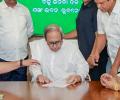
BJD chief Naveen Patnaik has voiced concerns over the Centre's decision to introduce Merchant Discount Rate (MDR) charges on UPI transactions above Rs 2,000 from October 15, urging protection for small traders and common people. This move has sparked a political debate, with the BJP defending the charges as beneficial for digital infrastructure and largely not impacting consumers, while the Congress and traders' associations criticise it as an additional burden.
The Reserve Bank of India (RBI) has endorsed the introduction of a Merchant Discount Rate (MDR) on UPI transactions exceeding Rs 2,000, effective October 15. This move, which levies a 0.4 per cent fee on merchant payments above the threshold, aims to bolster the long-term sustainability and growth of India's digital payments ecosystem. The RBI clarified that person-to-person (P2P) transactions and small person-to-merchant (P2M) payments below Rs 2,000 will remain free for users, ensuring no direct charge on customers.

The Jammu and Kashmir High Court has rejected a petition by the Enforcement Directorate to add charges of receiving and concealing stolen property in the alleged Jammu and Kashmir Cricket Association fund scam. While the court upheld the ED's right to file such an application, it found insufficient merit in the current material to invoke sections 411 and 424 of the Ranbir Penal Code, stating that the alleged acts were part of the principal transaction of conspiracy and breach of trust.
A trade body in Jharkhand, FJCCI, has urged the Union Finance Minister to withdraw the proposed 0.4% Merchant Discount Rate (MDR) on UPI transactions above Rs 2,000 for merchants. The body argues that this charge will significantly increase operating costs for businesses, especially MSMEs and retailers, who rely on the current zero-MDR regime for digital payments.
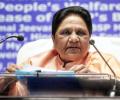
BSP chief Mayawati has criticised the Centre's decision to introduce a 0.4 per cent fee on UPI merchant transactions exceeding Rs 2,000, effective October 15. She termed it a "capitalist profiteering attitude" that burdens the common people, while the government clarified that the charge is on merchants and not customers for person-to-person transactions.
A finance company in Thane, Maharashtra, has reported being defrauded of Rs 25.96 lakh by five individuals who allegedly mortgaged fake jewellery to obtain loans. Police are investigating the case, which reportedly occurred in 2025.

President Droupadi Murmu has returned the West Bengal government's proposed anti-goonda bill for reconsideration. The objection stems from a provision in the bill that may overlap with a central anti-narcotics law, specifically concerning offences under the NDPS Act, 1985, and the PITNDPS Act, 1988. This raises concerns about potential duplication and repugnancy under Article 254 of the Constitution.
The Indian government has introduced a 0.4% fee on UPI transfers above Rs 2,000 made to merchants, effective October 15, ending nearly six years of free merchant payments. This move led to initial rallies in fintech stocks like Paytm and Mobikwik, though some later pared gains. Person-to-person transactions and small payments remain free for customers, with the fee being a Merchant Discount Rate (MDR).

A two-day weekend would help employees recover physically and mentally. They would return better prepared for branch work that demands patience, judgment, and accuracy, asserts Tamal Bandyopadhyay.
